
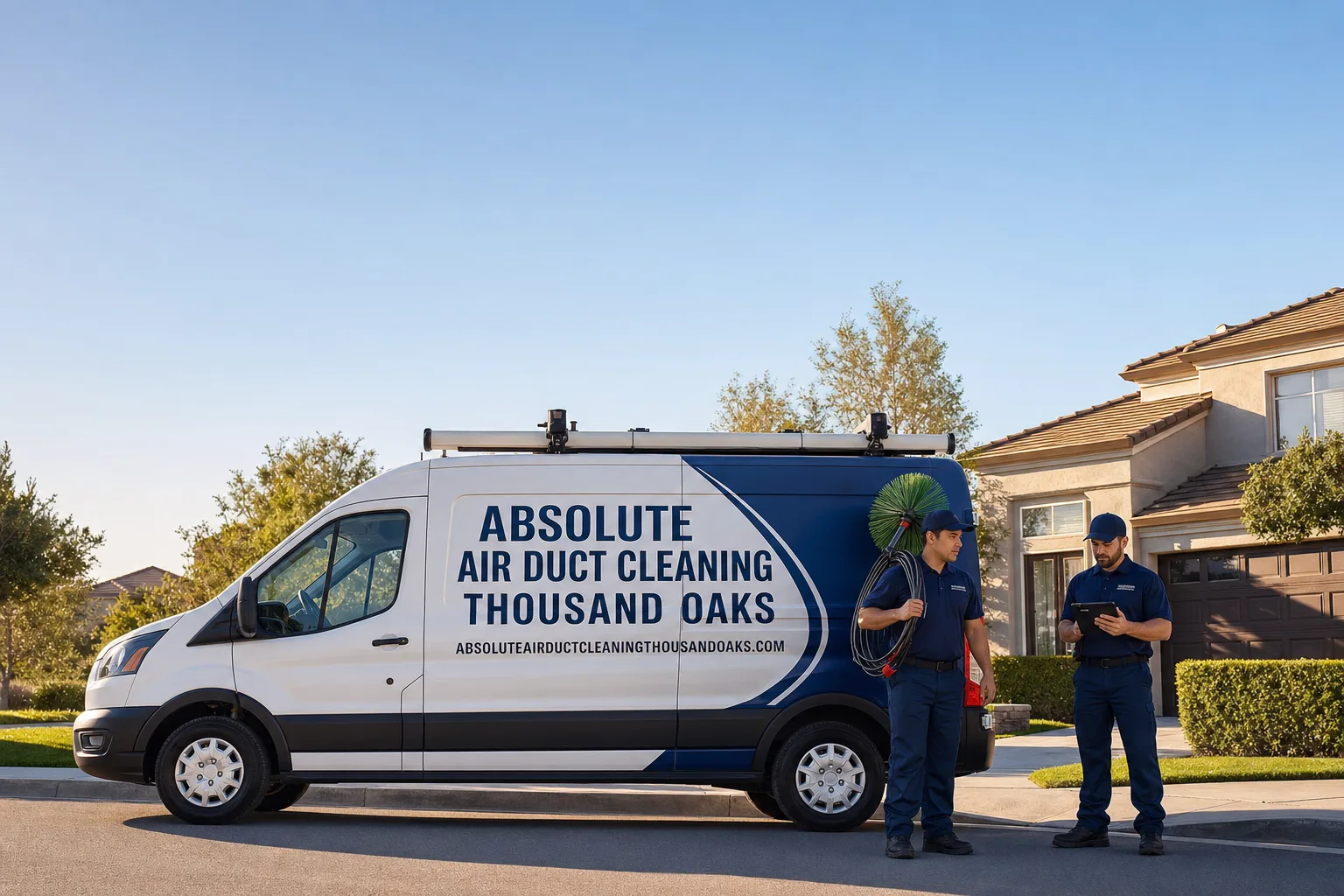

Fast, Reliable HVAC Cleaning Across Simi Valley
If your HVAC system is running but your home still smells stale, your filters clog faster than they should, or you’re dealing with the aftermath of a fire season, your system’s interior is telling you something. Absolute Air Duct Cleaning serves Simi Valley homeowners across ZIP codes 93062, 93063, 93065, and 93093 — and because we know this valley’s specific conditions, from its 140°F attic summers to its post-fire ash patterns, we’re not guessing at what’s inside your equipment. Call (424) 786-6859 to schedule a free estimate.
Why Absolute Air Duct Cleaning Thousand Oaks Is Simi Valley’s Preferred HVAC Cleaning Company
Simi Valley homeowners who’ve hired franchise duct-cleaning crews know the routine: a different technician shows up, runs a consumer-grade vacuum for twenty minutes, and hands you a bill. That’s not how we operate. Our HVAC Cleaning work in Simi Valley is led personally by Moris Adams — owner, lead technician, and the person actually inside your equipment on every visit. Moris brings professional-grade Nikro and Rotobrush systems to each job, the same equipment restoration contractors use after documented contamination events. Across five years and 127+ verified customer reviews, the consistent feedback from Simi Valley clients isn’t about speed — it’s about thoroughness and transparency. When Moris tells you what he found in your system, you can trust it’s accurate, because he found it himself.
Our HVAC Cleaning Services in Simi Valley
Evaporator Coil Cleaning
The evaporator coil is where your system’s air-handling work is most visible — and in Simi Valley, it’s typically the first component to show the effects of the valley’s inland particulate environment. During Santa Ana wind events, the semi-enclosed basin concentrates chaparral dust, combustion particles, and fine ash, pulling them directly into return-air intakes and coating coil fins within a single season. In homes near the Santa Susana Pass, we regularly pull evaporator coils that show dense gray-brown soot layering consistent with fire-season ash-fall rather than ordinary dust accumulation. Cleaning restores heat-transfer efficiency and stops the system from re-aerating contaminated residue every time the fan runs. A typical evaporator coil cleaning in Simi Valley runs $150–$280, depending on system size and contamination level.

Blower Cleaning
The blower wheel moves every cubic foot of air your family breathes indoors — and in Simi Valley’s aging 1970s and 1980s tract homes, the blower is often coated with a combination of fibrous debris shed from degraded flex ductwork and post-fire particulate matter that compresses into a dense cake on the wheel fins over years of operation. That buildup doesn’t just reduce airflow — it throws the wheel out of balance, straining the motor and adding to your energy bill. In the Wood Ranch area, we responded to a split-level home where the homeowner noticed a persistent burnt smell cycling through vents months after the 2019 fire season; pulling the return-air grille revealed a thick gray-brown soot cake on the blower wheel that had been baking onto surfaces every time the system ran. Using Nikro negative-air equipment, we extracted compacted ash from every flex-duct run in the unconditioned attic before addressing the blower directly. Blower cleaning in Simi Valley typically runs $120–$220.
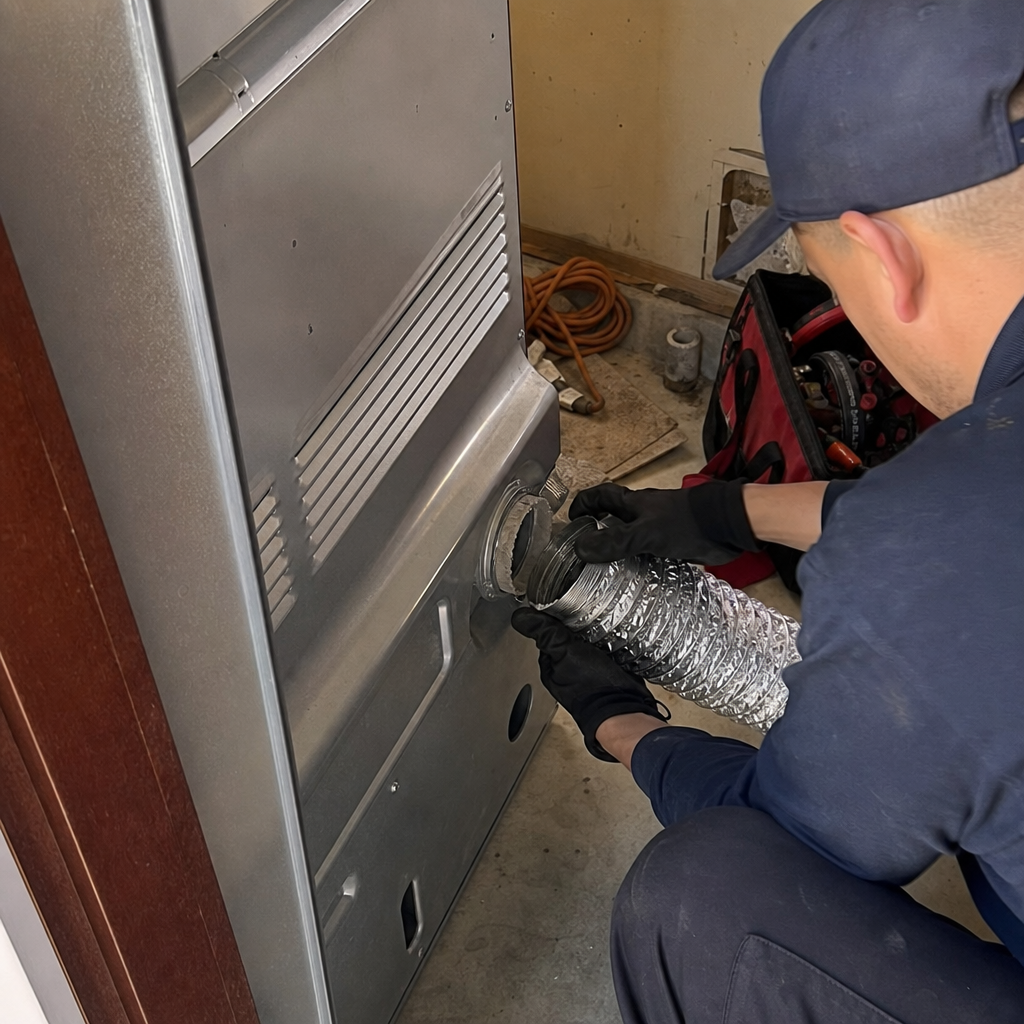
Condenser Cleaning
Simi Valley’s outdoor condenser units take punishment from two directions: the valley’s hot, dry summers push ambient temperatures well above 100°F, and wind events deposit a layer of fine chaparral dust and organic debris on condenser coil fins that restricts airflow and forces the compressor to work harder. Blocked condenser fins can raise operating temperatures enough to shorten compressor life by years. We clean condenser coils using appropriate low-pressure rinse techniques and coil-safe cleaning agents — not a garden hose on high, which bends fins and pushes debris inward. Condenser cleaning in Simi Valley generally runs $130–$240 depending on unit size and debris load.

Air Handler Cleaning
In many Simi Valley homes, the air handler sits in an unconditioned attic space where summer temperatures routinely exceed 140°F. That heat degrades the fiberglass liner of original flex ductwork, shedding fibrous debris that migrates downstream and coats air handler components — including the cabinet interior, drain pan, and coil housing. We clean the full air handler assembly, inspect for duct liner debris entering the system, and confirm the drain pan is clear to prevent the secondary moisture issues that Simi Valley’s drier climate can mask until mold is already established. Air handler cleaning in Simi Valley runs $160–$300 for a standard residential unit.
Heat Exchanger Cleaning
The heat exchanger is a component most homeowners never think about — until combustion residue from Simi Valley’s repeated fire seasons begins to accumulate on its surfaces. Ash and soot left inside a heat exchanger aren’t just an airflow problem; acidic combustion byproducts actively corrode heat exchanger metal over subsequent heating cycles, and a compromised heat exchanger is a carbon monoxide risk. Moris inspects and cleans heat exchanger surfaces as part of our full HVAC cleaning scope for Simi Valley homes, particularly those in the 93065 ZIP code corridor closest to the Santa Susana Pass, where ash-fall concentrations are heaviest after each fire season. Heat exchanger cleaning in Simi Valley typically runs $140–$260.

What happens when you call
- 1
A real person answersNo phone trees — you reach a local pro.
- 2
You get an upfront price rangeHonest numbers before anyone is dispatched.
- 3
A background-checked tech heads outLicensed & insured, dispatched right away.
- 4
You approve before work beginsNothing starts until you say go.
Coil Treatment — Why It Matters in Simi Valley
After cleaning the evaporator coil, we apply an EPA-registered antimicrobial coil treatment as a standard step for Simi Valley homes — particularly those in the southeastern quadrant of the valley. Here’s why: ash and combustion residue left on coil surfaces after fire events don’t just block airflow. They harbor acidic compounds that continue to degrade coil fins, and the moist environment of an operating evaporator coil creates conditions where microbial growth can follow. A coil treatment neutralizes those residues and leaves a protective coating that slows re-fouling between cleanings. In a valley where fire season runs October through November and the ash-fall path from the southern ridgeline hits homes near the Santa Susana Pass most directly, skipping that step isn’t conservative — it’s just incomplete.
Trusted Brands We Service in Simi Valley
Simi Valley homes run equipment from major manufacturers including Honeywell-controlled systems and setups compatible with Guardsman-treated components, and our cleaning process is designed to work with — not against — the specifications those brands require. We don’t use generic cleaning agents that void equipment recommendations. Where a coil treatment or filtration upgrade is warranted, Moris will tell you what fits your specific system and why, not just what’s on a shelf. Simi Valley clients across the 93063 and 93065 corridors can expect Moris to arrive with the right tools for the equipment he finds, not a one-size approach.
Common HVAC Cleaning Problems We See in Simi Valley Homes
- Degraded flex duct liner debris coating evaporator coils. Simi Valley’s housing stock is heavily weighted toward 1970s–1980s tract homes where original fiberglass flex ductwork runs through attics that exceed 140°F in summer. That heat breaks down the liner material over decades, and the shed fibers migrate into the air handler and pack onto evaporator coil fins — choking airflow season after season until the coil is physically cleaned and the duct condition is assessed.
- Post-fire soot compacted on blower wheels and heat exchangers. Homes in the southeastern parts of Simi Valley, particularly near the Santa Susana Pass in the 93065 ZIP code, sit in the direct ash-fall path when the southern ridgeline burns. The result is blower wheels and heat exchanger surfaces coated with a compacted, acidic soot layer that won’t clear on its own — and that gets worse with each heating cycle as it bakes onto metal surfaces.
- Evaporator coils fouling faster than the national average. Unlike coastal Ventura County cities that benefit from marine-layer air washing, Simi Valley’s inland, semi-enclosed position means the valley traps Santa Ana wind particulates, pollen, and combustion byproducts with no seasonal flush. Return-air systems load up with particulate matter faster here than in neighboring cities — some Simi Valley homeowners find their coils need attention after a single fire season rather than the standard two-to-three-year interval.
- Drain pan blockages missed during rushed cleanings. In Simi Valley’s drier climate, slow drain pan clogs don’t produce obvious water damage signals as quickly as they would in a humid coastal environment. That means a partially blocked drain pan can sit unaddressed through years of “cleaned” service calls, developing microbial growth inside the air handler that eventually reaches the airstream. Moris checks and clears the drain pan on every HVAC cleaning visit — it’s not an add-on.
The Easy Fire, the Santa Susana Pass, and What We Find in Simi Valley Ducts
Simi Valley’s bowl-shaped geography is not an accident of real estate — it’s a topographic trap. The valley sits downwind of the Santa Susana Mountains, and when fires burn the chaparral hillsides on the southern ridgeline, smoke and fine ash don’t disperse across open terrain. They settle into the valley floor and stay. The October 2019 Easy Fire burned directly through the area, and homes on the southeastern edge of Simi Valley — closest to the Santa Susana Pass and the elevated ground above the former Santa Susana Field Laboratory site — recorded the heaviest soot layering inside ductwork. Those properties sat in the direct ash-fall path. When we pull a return-air grille in that part of the valley on a post-fire cleaning call, the contamination pattern is unmistakable: dense gray-brown soot coating that doesn’t look like ordinary household dust and doesn’t respond the same way to cleaning. We use Nikro negative-air equipment specifically because it generates the suction levels needed to extract that compacted ash from flex-duct runs without pushing debris further into the system. No other Ventura County city our crew serves produces this specific contamination signature — it is particular to Simi Valley, and to that southeastern corridor most of all.
Pricing for HVAC Cleaning in Simi Valley, CA
Here’s what Simi Valley homeowners can expect to pay for individual HVAC cleaning services:
- Evaporator Coil Cleaning: $150–$280
- Blower Cleaning: $120–$220
- Condenser Cleaning: $130–$240
- Air Handler Cleaning: $160–$300
- Heat Exchanger Cleaning: $140–$260
- Coil Treatment (add-on): $60–$110
What moves the price is system size, accessibility (attic-mounted air handlers in the valley’s older split-levels take longer to reach safely), and the actual contamination level Moris documents before starting. If your home sits near the Santa Susana Pass corridor and ran its HVAC during a fire season without post-season cleaning, expect the higher end of those ranges. We provide a free on-site estimate before any work begins — call (424) 786-6859 to schedule yours.
We Also Serve Cities Near Simi Valley
Our HVAC cleaning service area extends well beyond Simi Valley. We regularly serve homeowners in Moorpark, Oak Park, Thousand Oaks, and Westlake Village — and because Moris personally leads every job, the same standard of work applies regardless of which city you’re in. If you’re just outside the Simi Valley limits, call us — we’re likely already working nearby.
Serving Simi Valley, CA — Our Local Coverage Area
We’re based in the Simi Valley area and know this community well. Use the map below to see our service coverage — if you’re nearby, we can almost certainly help.
FAQs — HVAC Cleaning in Simi Valley
The clearest sign is a persistent musty or faintly smoky odor that appears when the system first turns on — particularly during heating cycles, when residue on heat exchanger surfaces gets warm enough to off-gas combustion byproducts into the airstream. A visual check at the return-air grille can also tell you something: fire-season ash has a distinctive gray-brown color and a finer, more powdery texture than ordinary household dust, and it tends to accumulate in a ring pattern around the grille face. If your home is in the 93065 ZIP code area or on the southeastern edge of Simi Valley nearest the Santa Susana Pass, and you ran your system during the 2019 Easy Fire or any subsequent fire season without a professional post-season cleaning, there’s a real probability that compacted ash residue is still present on your evaporator coil, blower wheel, or inside your heat exchanger. Call (424) 786-6859 — Moris will document what he finds before touching anything.
Simi Valley’s inland, semi-enclosed valley geography means it doesn’t benefit from the marine-layer air washing that moves through coastal Ventura County cities during most of the year. Santa Ana wind events push combustion particulates, chaparral dust, and fine pollen into the valley basin and trap them there. Your return-air system pulls from that indoor air continuously, loading the evaporator coil with particulate matter at a rate that genuinely is faster than in neighboring coastal cities — this isn’t a maintenance myth. Add post-fire ash-fall seasons on top of that baseline particulate load, and coils in Simi Valley can reach a cleaning threshold in one to two years rather than the national benchmark of three to five. If your coil cleaning schedule was set by a manufacturer’s generic recommendation rather than your actual local conditions, it’s probably overdue.
It affects it significantly. Original 1970s fiberglass flex ductwork runs through unconditioned Simi Valley attics where summer temperatures regularly exceed 140°F — heat levels that break down the fiberglass liner material over decades of cycling. That liner sheds fibrous debris into the airstream, and those fibers migrate downstream into the air handler, coating evaporator coil fins and blower wheel surfaces with a material that traps additional dust and particulates on contact. The result is faster-fouling coils and reduced airflow that standard duct cleaning alone doesn’t fully address. When Moris works a 1970s Simi Valley home, he’ll note the duct condition and flag sections showing visible liner degradation — because continuing to clean the HVAC components downstream without addressing deteriorating ductwork is a short-term fix at best.
Coil treatment is the application of an EPA-registered antimicrobial agent to evaporator coil surfaces after cleaning — it neutralizes residual biological growth, inhibits re-colonization, and in post-fire contexts, helps neutralize acidic combustion byproducts that cleaning alone doesn’t fully eliminate. It’s important everywhere, but it’s especially relevant for homes in the southeastern Simi Valley corridor because those properties experience the heaviest ash-fall deposition after fire events on the southern ridgeline. Ash and soot contain acidic compounds that continue to attack coil fin metal and degrade solder joints on an operating evaporator coil — the moist condensation environment of a running coil accelerates that process. A coil treatment after cleaning breaks that cycle. Skipping it on a post-fire cleaning in this part of Simi Valley is leaving work half done.
The national benchmark for HVAC cleaning is every three to five years under normal residential conditions. Simi Valley’s conditions aren’t normal by that benchmark. The combination of faster particulate loading from Santa Ana wind events, degrading flex ductwork in the valley’s older housing stock, and recurring fire-season ash exposure compresses that interval for most homes here. For homes in the 93065 corridor near the Santa Susana Pass that ran their HVAC during a fire season, a post-fire inspection and cleaning is warranted regardless of when the last scheduled service occurred. For homes in the 93063 area with standard particulate exposure and no fire-season contamination events, every two to three years is a more realistic interval than the national average. Moris will give you a specific recommendation based on what he actually finds in your system — call (424) 786-6859 to get a real answer for your home.
Schedule Your Simi Valley HVAC Cleaning
If you’re in Simi Valley and your HVAC system hasn’t been professionally cleaned since before the last fire season — or you’re not sure when it was last cleaned at all — this is the call to make. Moris Adams handles every inspection and cleaning personally, using Nikro and Rotobrush professional-grade equipment and documenting what he finds before any work begins. No subcontractors. No surprises on the bill. Just an honest assessment of what’s in your system and the tools to address it properly. Call (424) 786-6859 to schedule your free estimate.
Written by Moris Adams, Owner & Lead Technician at Absolute Air Duct Cleaning Thousand Oaks, serving Simi Valley, CA and surrounding communities for five years.

