


Fast, Reliable Duct Repair & Sealing Across Simi Valley
If your Simi Valley home isn’t heating or cooling evenly — or if your energy bills climbed after last fire season — leaking or separated ductwork is usually the reason. Our Duct Repair & Sealing team serves Simi Valley directly from Thousand Oaks, putting Moris Adams and professional-grade equipment inside your attic rather than a rotating subcontractor crew. Call (424) 786-6859 for a free estimate — we know this valley’s housing stock well, and we’ll tell you exactly what we find.
Why Absolute Air Duct Cleaning Thousand Oaks Is Simi Valley’s Preferred Duct Repair & Sealing Company
Over five years and 127+ verified customer reviews, we’ve built a specific, working knowledge of Simi Valley’s duct problems — the post-Easy Fire soot layering, the baked-out flex duct connections in ZIP codes 93063 and 93065, the 1970s metal trunk lines whose sheet-metal-screw fasteners have cycled loose over decades. That’s not background reading. That’s what Moris has seen inside actual attics on both sides of the valley.
Every appointment in Simi Valley is led personally by Moris Adams. Customers aren’t handed off after booking. The technician who shows up is the owner — with Rotobrush and Nikro equipment loaded in the truck, not a shop vac and a bag of foil tape. That accountability is why homeowners along the Wood Ranch corridor and the neighborhoods near the Santa Susana Pass keep calling us back, and why they refer their neighbors.
We work across all four Simi Valley ZIP codes: 93063, 93065, 93093, and 93094. Whether your home is a single-story ranch off Erringer Road or a split-level in the southeastern hills nearest the former Santa Susana Field Laboratory ridgeline, the route to your attic access is one we’ve navigated before. Call (424) 786-6859 — estimates are free and there’s no obligation.
Our Duct Repair & Sealing Services in Simi Valley
Flex Duct Repair
Simi Valley’s 1960s–1980s tract homes hold more degraded flex ductwork than almost any market in Ventura County, and the reason is simple physics: unconditioned attics here regularly exceed 140°F through June, July, and August, baking the foil-and-fiberglass liner until the inner sleeve pulls away from the collar. When that inner liner separates, conditioned air dumps directly into attic space — and in post-fire seasons, that gap works the other direction too, pulling fine ash and soot into the living area. Moris double-clamps every collar and wraps each connection with mastic sealant rated for sustained high-heat exposure, not foil tape that’ll fail by the following summer.

Mastic Sealant Application
Foil tape is a temporary fix in Simi Valley attics. Full stop. The heat load here — amplified by the valley’s bowl geometry and the thermal mass of dark tile roofs — cycles tape adhesive through repeated expansion and contraction until it de-laminates, sometimes within a single summer. Mastic sealant — a fiber-reinforced, brush-applied compound — bonds permanently to metal and flex duct surfaces and stays flexible across the temperature range your attic actually sees. For homes near the Santa Susana Pass hillsides, where post-fire particulate coating adds a layer of contamination to joint surfaces, mastic is the only material that holds reliably long-term.
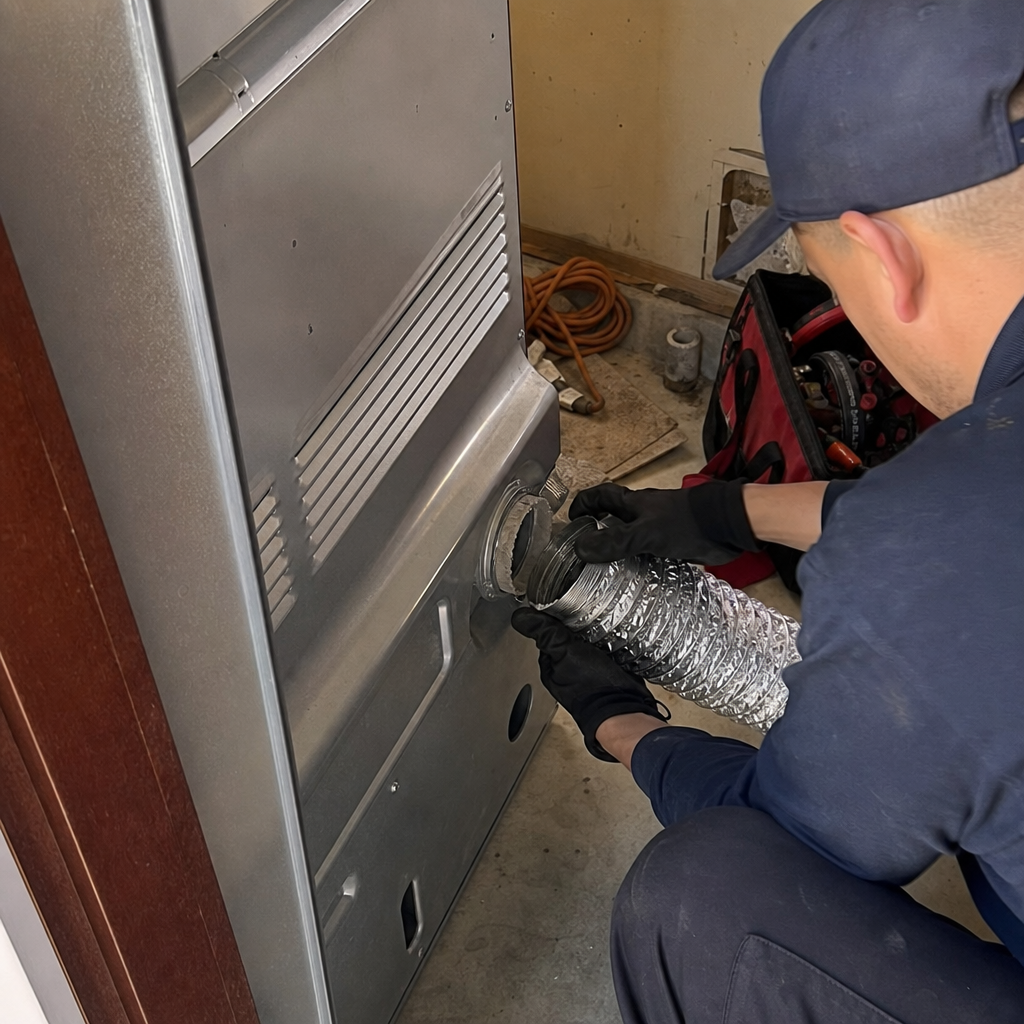
Metal Duct Repair
Original 1970s metal trunk lines in Simi Valley tract homes were fastened with sheet-metal screws and no sealant at all — a standard practice of the era that creates real problems decades later, once thermal cycling has worked those screw-joined seams loose. We inspect every accessible section of metal ductwork, re-seat loose joints, apply mastic at every seam, and confirm airflow with a final pressure check. Replacement isn’t always necessary; a properly sealed metal trunk line can last another twenty years with the right repair.

Duct Insulation
Flex duct liner failures in Simi Valley’s southeastern neighborhoods — the ones that absorb both the highest solar load and the heaviest post-fire ash fall from the ridgeline above the former Santa Susana Field Laboratory site — often leave sections of ductwork exposed or with damaged insulation wrap. We re-insulate exposed runs using foil-faced fiberglass wrap rated for high-temperature attic environments, reducing both heat gain into the supply airstream and the thermal stress that accelerates future liner degradation. In split-level homes where ductwork crosses both floor levels, we address every accessible run in a single visit so you’re not scheduling a return trip.

What happens when you call
- 1
A real person answersNo phone trees — you reach a local pro.
- 2
You get an upfront price rangeHonest numbers before anyone is dispatched.
- 3
A background-checked tech heads outLicensed & insured, dispatched right away.
- 4
You approve before work beginsNothing starts until you say go.
Trusted Brands We Service in Simi Valley
We work with Honeywell and Aprilaire filtration and air-quality components regularly — if your Simi Valley system is running one of these platforms, Moris knows the integration points and what a proper seal job looks like alongside existing filtration hardware. Our equipment lineup includes Rotobrush rotary brush systems and Nikro vacuums: professional-grade tools built for the contamination levels that post-fire Simi Valley homes produce, not entry-level gear. We carry mastic sealant, foil-faced insulation wrap, and duct hardware stocked for the connection types most common in Simi Valley’s tract-home inventory, which keeps turnaround tight.
Common Duct Repair & Sealing Problems We See in Simi Valley Homes
- Flex duct inner liner separation at plenum collars: Summer attic heat above 140°F shrinks and tears the fiberglass inner sleeve away from the collar fitting — the most common failure we find in homes along the 93063 and 93065 ZIP codes. Left unaddressed through even one fire season, the gap becomes a direct pathway for ash and particulate into the living space.
- Foil tape failure on previously repaired joints: Contractors who patch Simi Valley duct joints with standard foil tape rather than mastic sealant are essentially scheduling the next service call — the tape’s adhesive cannot survive repeated 140°F attic summers and de-laminates within months, reopening the leak.
- Loose seams on 1970s metal trunk lines: Original sheet-metal-screw fasteners in Simi Valley’s older tract homes work loose over decades of thermal cycling between cold winter nights and extreme attic heat. The resulting seam gaps are invisible from below but measurable — a duct blaster test routinely shows 20–30% airflow loss in homes that haven’t had a proper mastic application.
- Post-fire soot bypass through duct leaks: During Santa Ana wind events and wildfire seasons — the Easy Fire of October 2019 being the most documented example — small duct leaks shift from a comfort problem to a contamination problem. Return-air negative pressure draws fine ash and combustion particulates through gap points in return ducts, depositing them inside wall cavities and insulation where standard cleaning can’t reach them.
The Simi Valley Duct Problem No Other City Shares
On a split-level off Sequoia Avenue in the Wood Ranch area, our crew opened the attic access and immediately recognized the pattern: three flex duct runs had separated at the plenum collars, the inner liners shrunk and torn after decades of 140°F-plus summers. Post-Easy Fire soot wasn’t just sitting inside the ducts — it was bypassing the system entirely through the gaps and dumping directly into the living space. We reseated and double-clamped each collar, wrapped every joint with mastic sealant, and re-insulated the exposed sections. The final duct blaster check brought measured airflow loss from an estimated 28 percent down to near zero.
That’s not a freak case. It’s the standard condition inside homes along Simi Valley’s southeastern hillside edge, nearest the former Santa Susana Field Laboratory ridgeline. Those properties absorb the highest solar attic load in the valley AND sit in the direct ash-fall path when the southern ridgeline burns — a combination of stressors that accelerates flex duct liner failure faster than anything we see in neighboring Moorpark or Thousand Oaks. Mastic sealant isn’t optional here. It’s the only material rated to hold under those conditions.
Pricing for Duct Repair & Sealing in Simi Valley, CA
Duct repair and sealing in Simi Valley typically falls within these ranges, based on the work we perform across the valley’s housing stock:
- Mastic sealant application (per duct section or joint): $85–$175 per joint area, depending on access and condition
- Flex duct collar reseating and double-clamping: $120–$220 per connection point
- Flex duct section replacement (partial run): $180–$380 per run, depending on length and attic access
- Metal duct seam repair with mastic: $150–$300 per trunk section
- Duct insulation re-wrap (per exposed section): $95–$195 per section
- Full duct blaster pressure test: $150–$250, credited toward repair cost when we perform the work
Split-level homes in Simi Valley — particularly those in the 93065 ZIP code where ductwork crosses floor levels through tight chases — run toward the higher end of these ranges because access takes longer. Homes with heavy post-fire contamination on duct surfaces may require cleaning before sealant can bond properly, which we’ll identify and quote before any work begins. Call (424) 786-6859 for a free, no-obligation estimate — Moris will give you a real number after seeing the actual condition of your ductwork.
We Also Serve Cities Near Simi Valley
Beyond Simi Valley, Moris and the Absolute Air Duct Cleaning team serve the surrounding communities regularly. If you’re in Oak Park, Moorpark, Thousand Oaks, or Westlake Village, you’re well within our service area. Call (424) 786-6859 — the same owner-operated, professional-grade service comes to you regardless of which side of the hills you’re on.
Serving Simi Valley, CA — Our Local Coverage Area
We’re based in the Simi Valley area and know this community well. Use the map below to see our service coverage — if you’re nearby, we can almost certainly help.
FAQs — Duct Repair & Sealing in Simi Valley
Many 1970s-era flex duct systems in Simi Valley can be saved with targeted collar reseating, double-clamping, and mastic sealant — full replacement isn’t always necessary if the inner liner is still intact along the main runs. The critical inspection point is the collar connections at the plenum and the register boots, because that’s where the liner separates first under the heat stress Simi Valley attics produce. If the liner has torn or crumbled along the run itself, that section needs replacement; the rest of the system may seal fine. Moris will inspect every accessible connection before recommending anything. Call (424) 786-6859 for a free assessment.
Yes, and it’s more serious than most homeowners realize. Fine ash and combustion particulates pulled through leaking duct joints during the Easy Fire — particularly in homes on the southeastern edge of the valley, nearest the hillsides above the former Santa Susana Field Laboratory site — deposited inside wall cavities and on insulation surfaces, not just inside the duct interior. That contamination can also accelerate the degradation of flex duct liner material by coating joint surfaces and interfering with future sealant adhesion. If your system was running during the October 2019 fire event or any subsequent hillside fire, a full duct inspection before sealing is the right starting point. Call (424) 786-6859 to schedule one.
Foil tape fails in Simi Valley attics because standard pressure-sensitive adhesive isn’t rated for sustained temperatures above 140°F — and your attic routinely hits that through the summer. The tape’s adhesive softens, the foil lifts, and the leak reopens, sometimes within a single season. Mastic sealant — a brush-applied, fiber-reinforced compound that cures to a flexible, permanent bond — is the correct material for Simi Valley’s attic temperature range. Any contractor using foil tape as a primary sealant on Simi Valley duct joints is using the wrong material for the conditions. Call (424) 786-6859 and we’ll apply a mastic repair that holds.
Split-levels are a common housing type in Simi Valley — particularly in the Wood Ranch and central valley neighborhoods in the 93065 ZIP code — and tight attic hatches and ductwork distributed across two levels are exactly the conditions Moris works in regularly. We assess access points during the initial inspection and map the duct runs before quoting so there are no surprises mid-job. Work in split-level homes typically runs toward the higher end of our pricing ranges because access takes more time, and we’ll tell you that upfront. Call (424) 786-6859 for a free estimate specific to your home’s layout.
For most Simi Valley homes, an inspection every two to three years is reasonable — but homes nearest the Santa Susana Pass hillsides, or any home whose HVAC system was running during an active fire event, should be inspected the following season without waiting. The October–November Santa Ana wind period concentrates dust and particulate inside the valley’s basin at levels that accelerate both duct contamination and the stress on existing sealant at joints. A small leak that’s manageable in spring can become a full re-insulation call by December if it pulls heavy particulate loads through an entire fire season. Call (424) 786-6859 and Moris will give you an honest read on whether your system needs attention now or can wait.
Written by Moris Adams, Owner & Lead Technician at Absolute Air Duct Cleaning Thousand Oaks, serving Simi Valley and the surrounding Conejo and Simi valleys since 2019.
